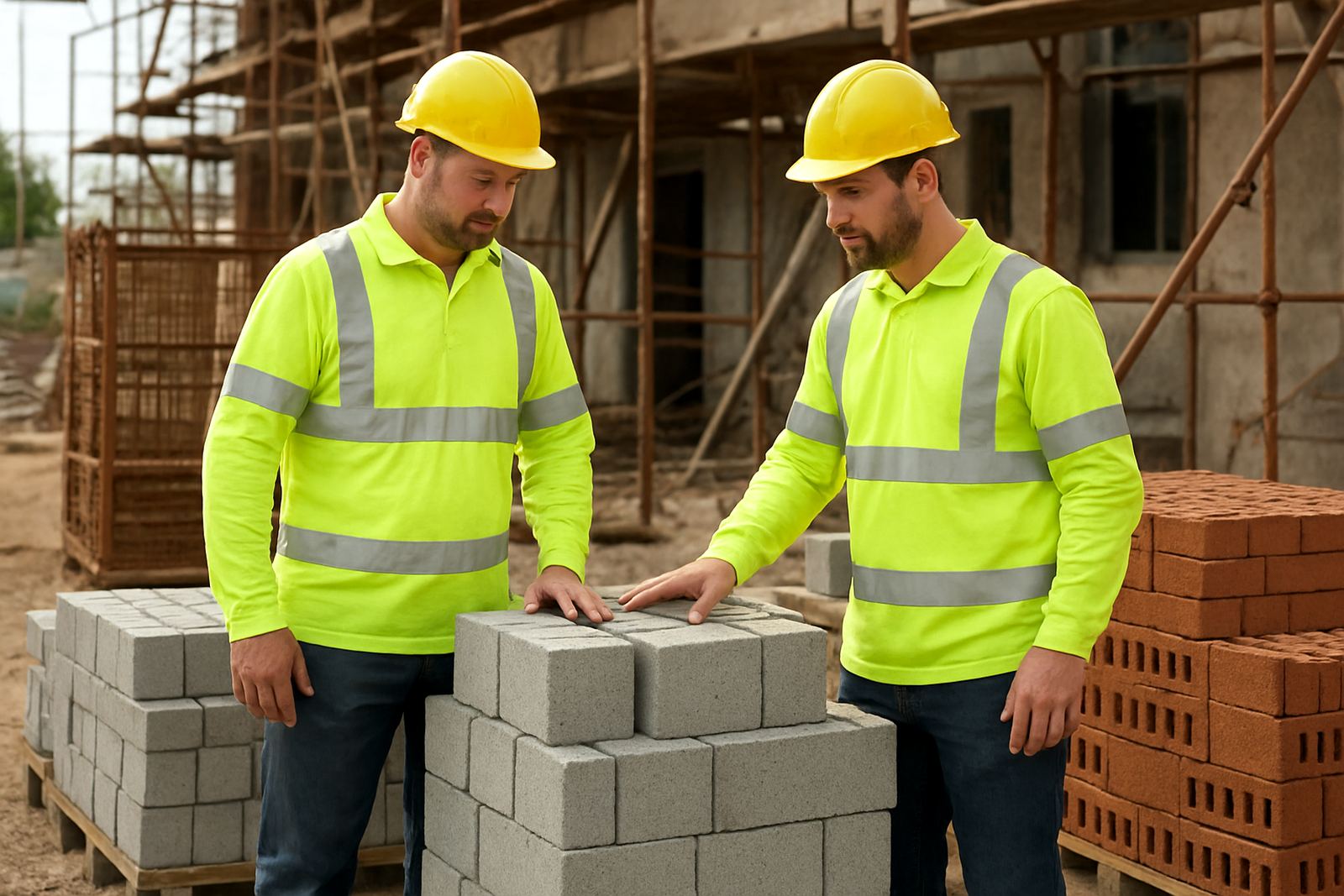
Workwear that stays readable on site
On a building site, your clothing has a job to do before it says anything about your company. It must show who is who, help supervisors spot teams quickly, and still look neat after cement dust, rain, sweat and repeated washing. We print on t-shirts, golf shirts, safety-style tops and other team garments for contractors, subcontractors, maintenance crews and project support staff.
Crews in Bloemfontein, Hamilton, Botshabelo, Thaba Nchu, Welkom, Bethlehem, Kroonstad and Parys often need workwear that works in both hot inland afternoons and cooler early starts. For that reason, we help clients choose garments and print positions that are practical for daily use, not just for handover day.
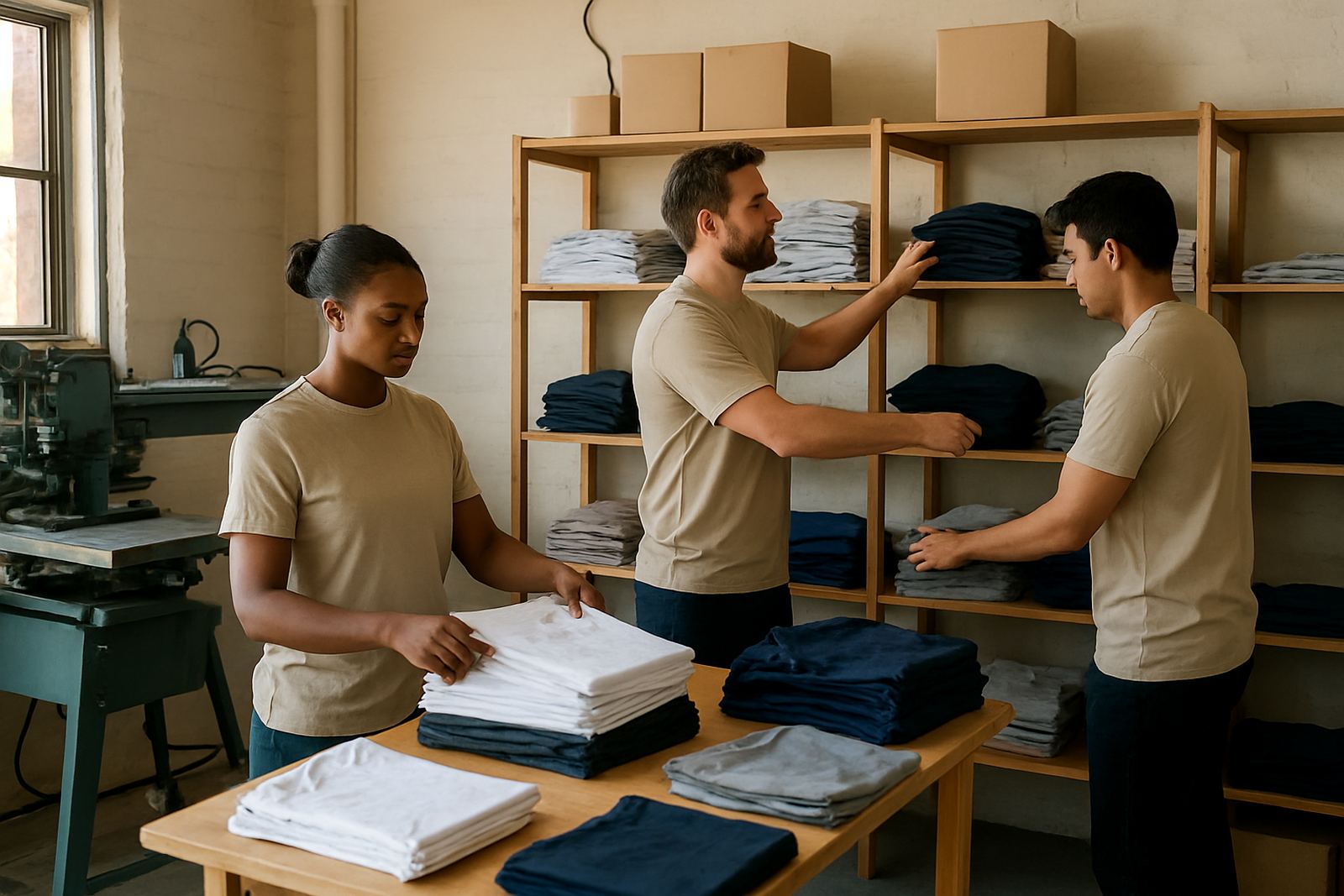
If your team moves between site office, yard and the field, simple branding on the chest, back or sleeve can help with identification and keep everyone looking organised. For larger projects, we also handle mixed sizing and sorted packing so each person gets the right item before the next shift starts.
Typical crew kit we print for projects
Most construction orders are built around a simple set of garments that can be issued in batches. The right mix depends on the site, the role and whether staff need everyday uniforms or event-specific clothing for launches, inspections or handovers.
- Heavy-duty t-shirts for general labour teams
- Golf shirts for supervisors, foremen and client-facing staff
- Long-sleeve tops for sun and dust protection
- Sports-style shirts for site walks, labour days and training groups
- Promotional shirts for project launches and community work
Some sites need only one colour and one print position. Others need several departments marked clearly, such as admin, safety, contractors and maintenance. We can keep the layout simple or adapt it for role-based identification, with colour matching where needed so the garment and logo work together cleanly.
For orders that include multiple names, branches or project references, our artwork team can help format the print so it stays legible from a distance. That matters when vehicles are moving, teams are spread across a large site or visitors need to identify a crew quickly.
Planning the layout before production starts
The best crew shirts are planned before the first print run. That means deciding on garment colour, print size, artwork placement and whether the same design will be used across a full team or split by role. A front left-chest logo is common for regular uniforms, while a back print helps with visibility on larger sites.
We also advise on sizing. Construction teams usually need a wider spread of sizes than office staff, and a rushed size order can leave some workers with garments that are too tight or too loose. That creates waste, delays issue-out and leads to a messy looking team line-up. If the project is rolling out in phases, it is often better to print in batches and confirm sizing as each group is appointed.
- Keep the main logo simple enough to read at a distance
- Use print positions that sit clear of pockets, reflective strips and seams
- Choose garment colours that do not fight with dust or site grime
- Allow enough lead time for approvals, size sorting and bagging
Where there are municipal or site access rules, especially on larger developments, it helps to keep the design tidy and professional rather than overcrowded. A clean print usually wears better and is easier to reissue when replacements are needed later.
Common mistakes on construction clothing orders
The most common mistake is ordering clothing that looks good on a mock-up but fails in daily site use. Thin fabric, tiny artwork and dark prints on dark garments often disappear once the crew is working. Another problem is skipping the sizing check. Even a small group of twenty can end up with uneven distribution if sizes are guessed instead of measured.
Another issue is trying to fit too much information onto one shirt. If the company name, project name, contact line and multiple logos all compete for space, the result can be difficult to read. In construction work, clarity matters more than decoration. One clear logo and one support line is usually enough.
We also see rushed reorders when a project expands unexpectedly. If the first run was never sorted by size or packed by crew, issuing more stock becomes slower and more confusing. That is why individual bagging and size sorting save time when the teams are large, split across suburbs or arriving on different dates.
For coastal work, humidity can affect how shirts are stored before issue, while inland dust can mark garments before they are even worn. Keeping spares in sealed packaging helps maintain a cleaner finish until the team is ready to receive them.
Budget ranges for crew uniforms in rand
Construction workwear budgets vary depending on garment type, quantity, number of print positions and whether you need extra services like artwork setup, colour matching or individual bagging. As a general guide, small runs cost more per item, while larger project orders reduce the unit cost.
For basic printed crew shirts, many clients budget from about R65 to R140 per item, depending on the garment quality and the print size. Golf shirts for supervisors or site leads often fall in a higher range, usually from about R110 to R220 per item. If you add multi-position printing, names or role labels, expect the price to move upward. Bulk order printing usually gives the best value when you need 50, 100 or more items.
- Small run orders: higher unit price, useful for trial teams or urgent starts
- Bulk orders: better value for full crews and repeat projects
- Artwork setup: may be charged when files need adjustments or recreation
- Individual bagging and sorting: helpful for large issue-outs and phased rollouts
If you are working to a fixed project budget, it helps to start with the most visible items first, such as shirts for supervisors and public-facing teams, then add the rest of the crew in the next phase. That approach keeps cash flow manageable without leaving the site looking unfinished.
How we handle orders from Bloemfontein and beyond
Our base is in Hamilton, Bloemfontein and we work with clients across the Free State and nationwide through couriered orders. Construction teams often need clothing delivered to multiple points at once, so we keep the process practical: confirm the sizes, approve the artwork, print the order, then sort and dispatch it in a way that makes issue-out easier on your end.
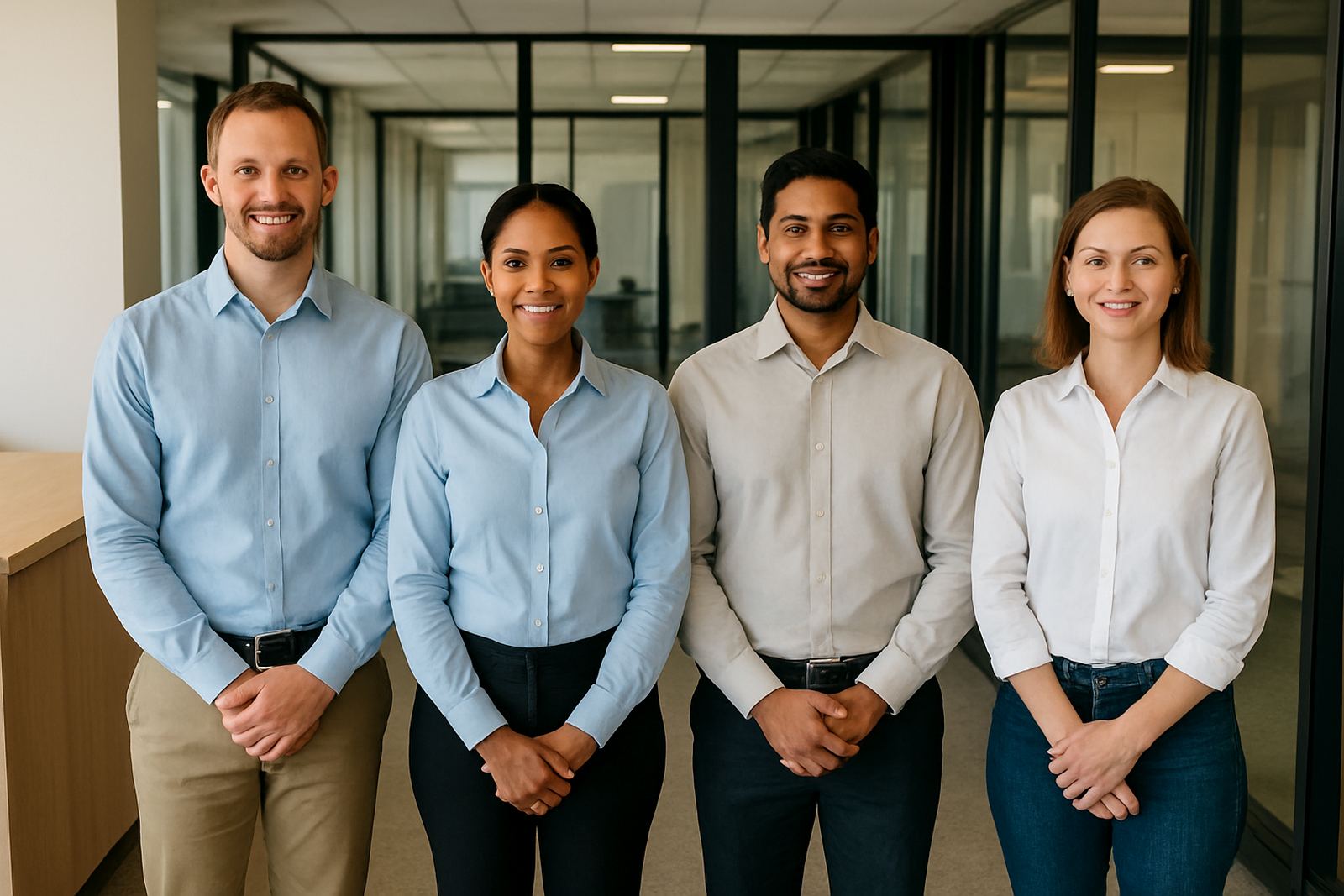
Screen-Printers Service has been serving businesses and teams since 2008, and our crew understands that site clothing is not a vanity item. It is part of the daily operation. Kagiso Molefe leads the business, with Lerato van Wyk handling sales, Sibusiso Ndlovu overseeing production, Annelise Botha managing artwork, Kagiso Molefe on dispatch, Nokuthula Dlamini in client care and Willem Jacobs on quality control.
Whether you are outfitting a small contractor in Kroonstad or a larger project team in Welkom, we keep the focus on clear branding, workable sizing and reliable turnaround. Clients reach us through the enquiry form on our contact page, and from there we guide the order through the practical steps needed for print and delivery.
When construction branding needs to look professional
Some crews need clothing for internal use only, while others are dealing with developers, engineers, municipal inspectors or members of the public every day. In those cases, the uniform becomes part of the first impression. A neat, consistent print can help a crew look organised even when the site itself is busy, dusty or changing fast.
This is especially useful for project support teams, drivers, maintenance groups and subcontractors who move between locations. Clear branding reduces confusion, helps with access control and gives a stronger sense of responsibility across the team. It also makes replacement orders simpler, because the same artwork can be kept on file and reprinted when the next phase starts.
If you are planning workwear for a new build, a refurbishment or ongoing maintenance contracts, we can help you choose a print method and clothing mix that suits the pace of the job. The aim is straightforward: clothing that holds up, prints that stay readable, and an order process that does not waste time on site.