
Start with the purpose of the hoodie
Before you compare styles, decide where the hoodies will be worn and how often. A hoodie for a school trip in Bloemfontein is not the same as a retail-style item for a sports club in Welkom or a staff layer for early mornings in Bethlehem. If the garments will be worn every week, you need a heavier fabric and better stitching. If they are for a one-day event or giveaway, a lighter option may be more practical and keep costs under control.
Think about who will wear it too. Team hoodies for adults usually need a fuller cut, while school or youth garments often need a neater fit with enough room for movement. If you are ordering for a mix of body shapes, it helps to choose a style with a broad size range and a measured sizing chart. For retail-style wear, the finish matters just as much as the logo, so check the hood shape, cuff quality and how the neckline sits.
- Daily wear: go for heavier fleece and stronger seams
- Event wear: choose a lighter fabric and keep decoration simple
- Retail style: focus on fit, shape and a cleaner finish
- Workwear: check comfort under jackets or over other layers
Compare the fabric weight and inner finish
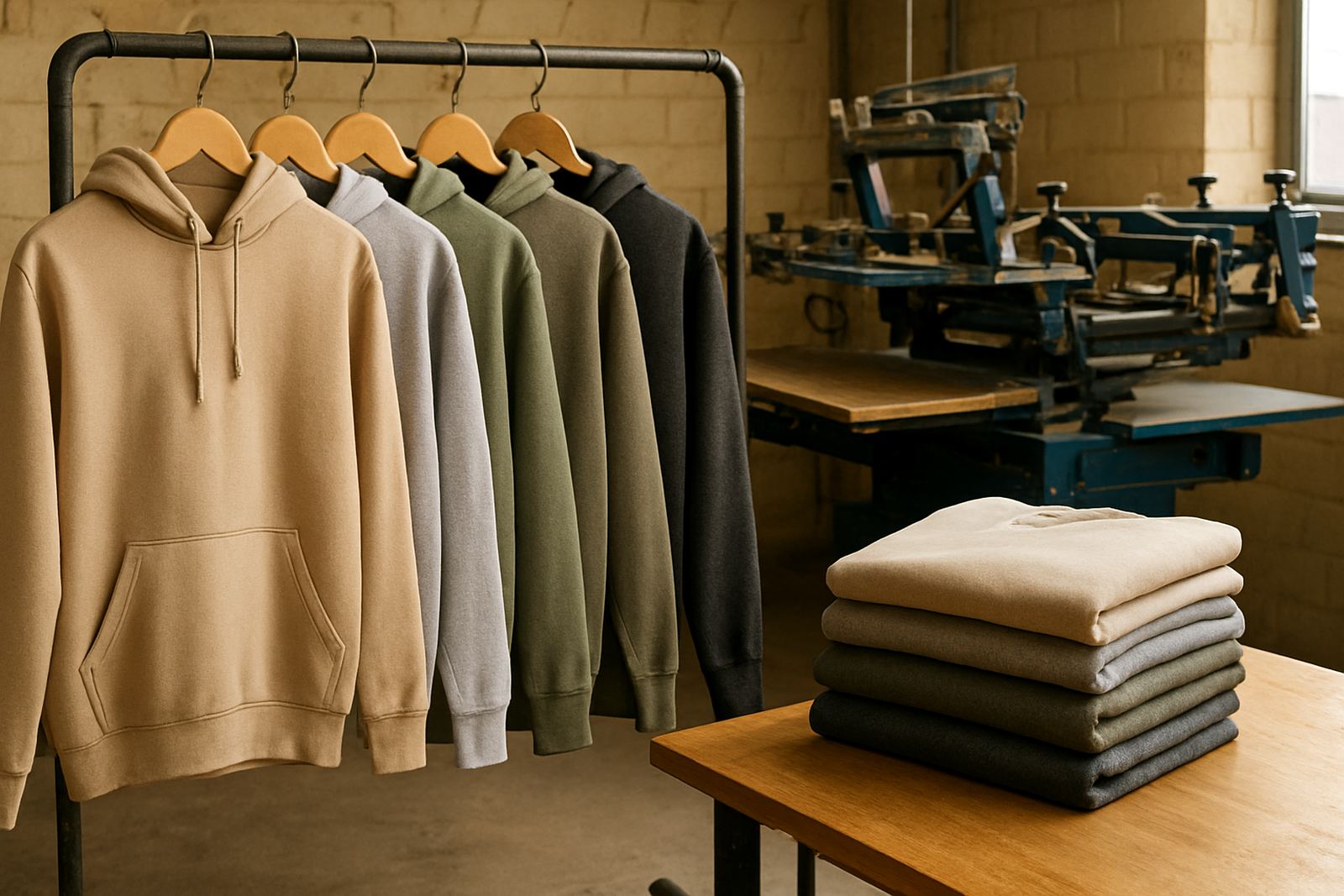
Fabric weight tells you a lot about how a hoodie will feel and perform. A lighter hoodie is easier to wear in milder weather, but it may not keep its shape as well after repeated washing. A heavier hoodie feels warmer and more substantial, which suits winter use in places like Thaba Nchu, Parys or the colder Free State mornings. If your team will wear the hoodies in air-conditioned offices, classrooms or early starts at sports grounds, this can matter more than people expect.
The inside finish also changes comfort. Brushed fleece feels soft and warm, while a loopback or unbrushed inner can be better for active use and less heat build-up. Check whether the fabric is mostly cotton, a cotton-rich blend, or a synthetic mix. Cotton-rich fabrics often feel comfortable and print well, while blends can hold shape better and dry faster after washing. For coastal humidity in other parts of South Africa, a quicker-drying hoodie can be a useful choice.
- Lightweight: better for mild weather and short wear periods
- Midweight: a practical all-round option for teams
- Heavyweight: warmer and more durable for regular use
- Brushed inner: softer and cosier for colder conditions
Fit details that change how the hoodie wears
Two hoodies can be the same size on paper but wear very differently. Check the body length, sleeve length, shoulder shape and cuff firmness. A boxier cut gives more room over uniforms or sports kit, while a closer cut often looks neater for retail-style wear. If the hood will be worn under a jacket, avoid a bulky neckline that bunches up. The hem should sit properly when the wearer lifts their arms, not ride up too high.
Pocket style is worth checking too. A front kangaroo pocket is common and practical for cold weather, but it can interfere with chest printing if the design sits too low. Some styles have side pockets or a cleaner front panel that works better for branding. If you want a strong visual on the chest or back, ask where the print area is clear and how much space is available once the seams and pocket are taken into account.
- Check shoulder width for a neat or relaxed fit
- Compare sleeve length for different age groups
- Confirm the print area before placing artwork
- Make sure the hood sits flat and does not pull back the neckline
Choose a print plan that matches the garment
Not every hoodie suits the same print approach. The fabric texture, seams and pocket position all affect how artwork looks once applied. Bold logos and clear text usually work best on hoodies, especially for schools, clubs and company teams. If your design uses fine lines or small lettering, ask for a layout check before production starts. On darker hoodies, colour contrast matters a lot and weak contrast can make the print hard to read.
Think about where the artwork should go. Left chest prints are common for staff wear, while larger back prints work well for events and supporter wear. Sleeve prints can look sharp, but they need accurate placement. For bulk orders, consistency is important, so the same placement and size should be maintained across all garments. If you need a colour to match existing uniforms or branded clothing, it helps to confirm the nearest possible print match early in the process.
- Left chest: ideal for uniforms and subtle branding
- Large back print: useful for events and team identification
- Front centre: best for bold promotional designs
- Sleeve print: works for added detail or sponsor names
Build the order around sizing and sorting
Hoodies are one of the most common garments to get wrong on size, because people like different fits. Some prefer a close fit, others want room for layering. For school orders, sports groups and staff packs, it is better to gather sizes carefully before printing begins. A size chart is useful, but it helps even more if you also check whether the group prefers standard, relaxed or oversized wear. That saves time and avoids returns later.
For larger orders, size sorting and individual bagging make distribution much easier. If you are sending hoodies to multiple branches, schools or event teams across the Free State, labelled packing prevents mix-ups. It is also helpful when the order includes mixed colours or different print positions. Keep a simple list of names, sizes and quantities so the final hand-out is quick and accurate. For busy managers and school organisers, this step makes a real difference.
- Collect sizes before approving production
- Use a clear list for names, colours and quantities
- Ask for sorting if the order is going to multiple people
- Confirm whether extras are needed for late additions
Check the finish, care and delivery plan
The last step is checking how the hoodie will wear after printing and washing. Ask how the garment should be cared for so the print lasts longer. In most cases, turning the hoodie inside out before washing and avoiding harsh tumble drying helps preserve the finish. This matters for bulk orders where the same garment may be washed many times over the season. Good stitching, firm cuffs and a tidy hem all help the hoodie keep its shape.
If you are ordering for Bloemfontein, Hamilton, Botshabelo, Thaba Nchu, Welkom, Bethlehem, Kroonstad or Parys, delivery timing should be planned around your event or uniform issue date. Couriered orders across South Africa need a little extra lead time, especially when there are size changes or artwork approvals still outstanding. For teams and retailers alike, the best hoodie is the one that suits the wearer, holds its shape, and arrives ready for issue with no last-minute panic.
- Ask about wash care before placing the order
- Allow time for artwork approval and size confirmation
- Plan ahead for courier delivery to outlying towns
- Check the final pack before hand-out or resale