What shirt weight actually means
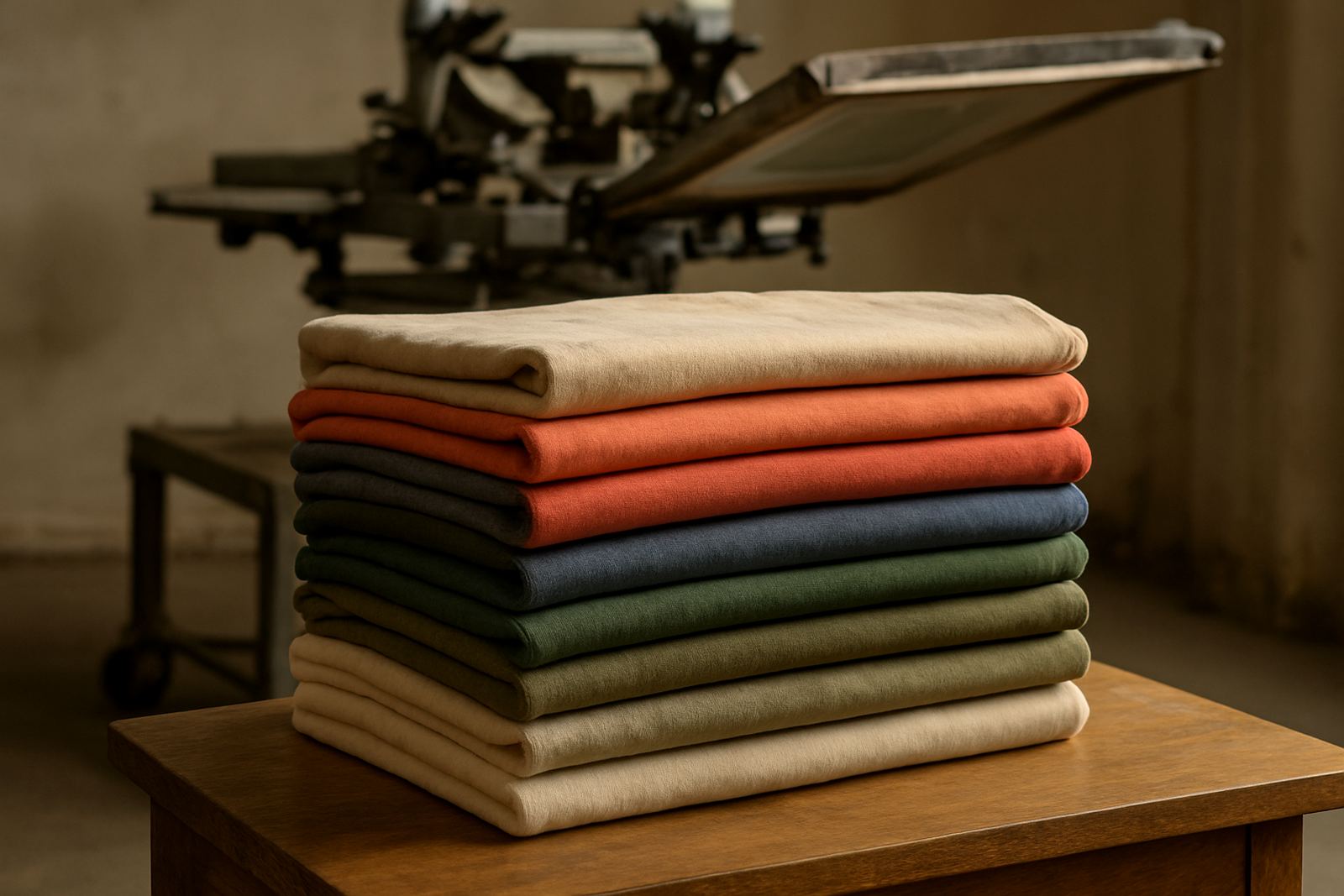
Shirt weight is usually measured in grams per square metre, or GSM. In simple terms, a lower GSM feels lighter and cooler, while a higher GSM feels thicker, denser and often a bit more durable. Two shirts can look similar on the rail but feel very different once they are worn, washed and printed.
For screen printing, weight matters because the fabric changes how the ink sits on the garment. A lighter shirt can feel airy and comfortable in summer, but it may show more through the print if the base cloth is very thin. A heavier shirt usually gives a firmer feel and can hold a more substantial print without the garment seeming flimsy.
In our work across Bloemfontein, Hamilton, Botshabelo and Thaba Nchu, we see that the right weight depends less on fashion and more on use, budget and the conditions your people wear the shirts in.
Lightweight shirts for events and hot days
Light shirts are a good choice when comfort and price are the first priorities. They suit one-day events, fundraising drives, colour runs and summer campaigns where people may wear the shirt only a few times. In the Free State heat, especially for outdoor promotions, a lighter shirt can make a noticeable difference for staff and attendees.
They are also practical for large quantities where every rand counts. If you need 300 or 500 shirts for a school event or community day, a lighter option can help you keep the total within budget without dropping the print count or artwork detail.
- Good for hot weather and active use
- Often best for promotions and short-term wear
- Usually more affordable in bulk
- Can feel softer and less bulky under jackets or overalls
That said, very light shirts can feel thin if the fabric quality is too low. If a shirt is too flimsy, seams may twist after washing and the print can look less neat over time. It is worth checking the sample weight before placing a large order.
Midweight shirts for everyday uniforms
Midweight shirts are the most versatile option for many South African businesses. They work well for staff uniforms, school activities, church groups and sports support wear. They have enough substance to feel smart, but they are not so heavy that they become uncomfortable in warmer weather.
For uniform printing, this is often the safest middle ground. A midweight shirt gives a tidy appearance for reception staff, warehouse teams, delivery crews and event personnel. It also tends to hold up better with regular washing, which matters when the same shirt is worn each week.
If you are in Bloemfontein, where mornings can be cool and afternoons warm, a midweight shirt can work across seasons. That is useful for teams moving between indoor and outdoor spaces, or for organisations that need one shirt type for the whole year.
Heavyweight shirts when durability matters
Heavy shirts are better when you need a more substantial garment. They are often preferred for colder months, workshop use, security teams, and uniforms that must stand up to frequent wear. The thicker fabric feels stronger in the hand and usually gives a neater drape on the body.
They are also a sensible choice when the shirt is part of a formal brand presentation. A heavier shirt can make a uniform feel more professional, especially for front-facing staff and school apparel where presentation matters as much as comfort.
- Better for cooler weather and indoor-to-outdoor work
- Often lasts well through repeated washing
- Can give a more substantial feel for uniforms
- May cost more, but can suit long-term use
In coastal areas humidity can change how a shirt feels through the day, but in inland places like the Free State a heavier shirt is often more practical during winter. It gives better warmth without needing extra layers, which is useful for early starts and evening shifts.
How weight affects print results
The fabric weight can influence how cleanly your artwork prints. On a lighter shirt, fine detail may need careful setup so the print does not overpower the fabric. On a heavier shirt, the surface can usually take a bolder print with less chance of the garment feeling stretched or see-through.
Colour matching also matters. Dark shirts need proper underbase planning so the artwork reads well, while lighter shirts may allow brighter colours to show more clearly. Our production team checks the garment, the ink coverage and the print position before the run starts, because the shirt itself is part of the final result.
If you are ordering sportswear printing or event shirt printing, think about how the print will look after washing and sweating. A shirt that is too thin may not support repeated use as well as a firmer garment, especially where the print covers a large area.
Budget, quantity and use case should guide the choice
Many buyers start with budget, and that is sensible. The best shirt weight is not always the heaviest or the cheapest, but the one that suits the job. A small run for a leadership team may justify a better grade shirt, while a bulk order for a fun run may call for a lighter, lower-cost option.
When planning your order, ask these questions:
- How often will the shirt be worn?
- Will it be washed weekly or only once or twice?
- Is comfort more important than a formal look?
- Will the shirt be used indoors, outdoors or both?
- Is the order for a short event or long-term uniforms?
Size sorting and individual bagging help when you are distributing to schools, clubs or branch staff across places like Welkom, Bethlehem, Kroonstad and Parys. If the garment weight is right from the start, distribution becomes easier and fewer items are returned because people dislike the fit or feel.
A practical Free State example
A school in Bloemfontein needing shirts for a sports day might choose a lighter weight for comfort, quick movement and price. The same school ordering staff shirts for the full term could go for a midweight option so the shirts look neat after many washes. If the order is for winter prefect shirts or a workwear group on site, a heavier shirt may be the better call.
This is why it helps to match the garment to the real use, not only the event name. A shirt that feels good on the day and still looks decent after the tenth wash gives better value than a cheaper shirt that loses shape quickly. For businesses and schools in Hamilton and beyond, that balance matters more than chasing the lowest line item.
At Screen-Printers Service in Hamilton, Bloemfontein, we help clients compare options for custom screen printing, bulk order printing and small run printing, so the shirt weight supports both the artwork and the budget. The right choice is usually the one that your people will wear again.