
Start with the first wash, not the first wear
The first wash matters because fresh prints need a little care before they settle into regular use. If you have just collected shirts for a staff launch, a school event or a sports day, let the garments rest for 24 hours before washing where possible. That gives the print time to cure properly and reduces unnecessary rubbing in the machine.
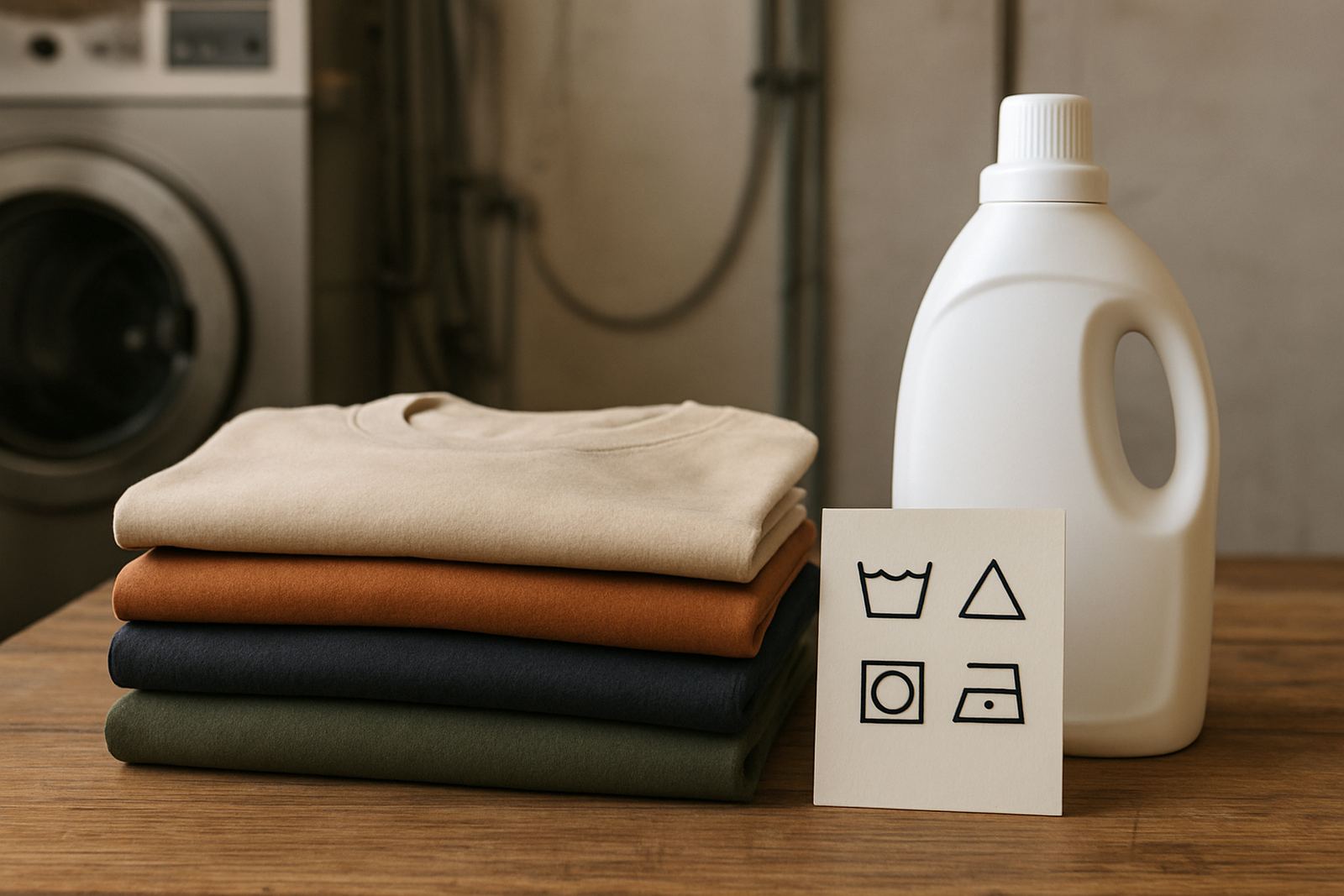
Check the garment inside out before it goes into the wash. If there is any loose lint, dust or packaging residue, remove it gently by hand. Do not soak printed items in strong detergent, bleach or stain remover unless the care label says it is safe. For most printed cotton and polycotton items, a normal cool wash is enough.
Wash less aggressively, especially in hard-working laundry rooms
In many homes and businesses across Bloemfontein, Hamilton, Botshabelo and Thaba Nchu, laundry gets done in a rush. That is where prints get damaged. High heat, harsh spinning and overloading the machine can all shorten the life of the decoration. Use a gentle cycle, cool or lukewarm water and a mild detergent.
If you are washing uniforms for a workshop, warehouse or school, sort them by colour and soil level first. Heavily soiled items should not rub against lighter garments for too long. A bit of planning saves time and keeps the print area looking cleaner for longer.
- Turn printed garments inside out before washing.
- Use cool water instead of hot water.
- Avoid bleach and strong stain removers on printed areas.
- Do not overload the washing machine.
- Choose a mild detergent with no harsh whitening agents.
Drying methods that keep prints from cracking
Heat is one of the biggest threats to printed apparel. A tumble dryer on high heat can weaken the print bond and make the surface age faster. When the weather allows, line dry garments in the shade rather than under direct sun. Bloemfontein sun can be strong, and repeated exposure can fade both fabric and print over time.
If you must use a dryer, keep it on a low heat setting and remove the items while they are still slightly damp. Shake them out gently and smooth the print area by hand. Never iron directly on top of a print. If the garment needs pressing, turn it inside out or place a clean cloth between the iron and the printed surface.
- Line dry in shade where possible.
- Keep tumble-drying on low heat only.
- Remove garments promptly after drying.
- Never place a hot iron straight onto the print.
- Avoid hanging wet shirts where the print folds on itself for too long.
Storage habits for uniforms, event shirts and school apparel
How you store printed apparel makes a difference, especially for bulk orders that are not worn every day. Clean garments should be fully dry before packing away. Even a little dampness can cause musty smells, mildew and transfer marks, especially in humid coastal areas or in rooms with poor ventilation.
For schools and companies in places like Welkom, Bethlehem, Kroonstad and Parys, it helps to keep sorted packs in cool, dry cupboards or covered storage bins. Fold shirts with the print facing outward rather than creasing the design sharply. If uniforms are stored for a term or a season, check them every few weeks for moisture or insect damage.
- Store only fully dry garments.
- Keep items in a cool, dry place with airflow.
- Avoid heavy boxes sitting on printed stacks for long periods.
- Use clean covers or sealed bins for long-term storage.
- Separate dark and light garments to prevent colour transfer.
Handling rules for sportswear, events and daily uniforms
Printed sportswear and event shirts usually get more rough treatment than office wear. They are packed into kit bags, worn in the sun, and washed more often. That means the care routine needs to be consistent. Teach staff, learners or team members not to tug at the print, scrub it with a nail brush or iron over logos and numbers.
For daily uniforms, it also helps to rotate garments so the same shirt is not worn and washed every day. This is useful for security teams, retail staff, maintenance crews and school groups. Rotation gives the fibres time to recover and reduces early wear on the print. If a shirt picks up oil or dirt during the day, treat the stain as soon as possible instead of waiting for the next wash cycle.
When a print needs care, not replacement
Not every mark means the item is ruined. Light surface wrinkles, lint or a bit of stiffness after drying can often be fixed with better washing and storage habits. If the print has started to lift at the edges, stop using heat on it and avoid rubbing the area. Gentle handling can prevent a small issue from becoming a bigger one.
If you manage branded clothing for a business, school or event team, it helps to keep one simple care routine for everyone. The same advice should go to the person washing the shirts in Hamilton, the club captain in Botshabelo and the organiser sending courier parcels to other provinces. Consistent care is what keeps a print looking neat from the first wear to the last.
Good printing is only part of the job. Good aftercare keeps the garment doing its work. With the right washing, drying and storage routine, printed shirts, uniforms and event wear can stay sharp through long school terms, busy trading periods and repeated use.
A practical care checklist you can reuse
If you want a quick reminder, use this simple checklist every time you wash printed clothing. It works well for homes, schools and businesses that handle uniforms in batches.
- Wait before the first wash if the garment is new.
- Wash inside out on a gentle cycle.
- Use cool or lukewarm water only.
- Skip bleach, strong stain removers and harsh scrubbing.
- Dry in the shade or on a low heat setting.
- Store clean items only when fully dry.
- Keep iron heat away from the printed area.
These small steps cost nothing, but they can add months of good wear. For anyone ordering printed apparel across Bloemfontein, the Free State or nationwide, the aftercare is part of protecting the value of the order.